
Plastic SurgerySymposium recordingLasers and energy-based devices
Laser and aesthetic controversies debated by leading dermatologic surgeons — 32 rapid-fire talks in four hours
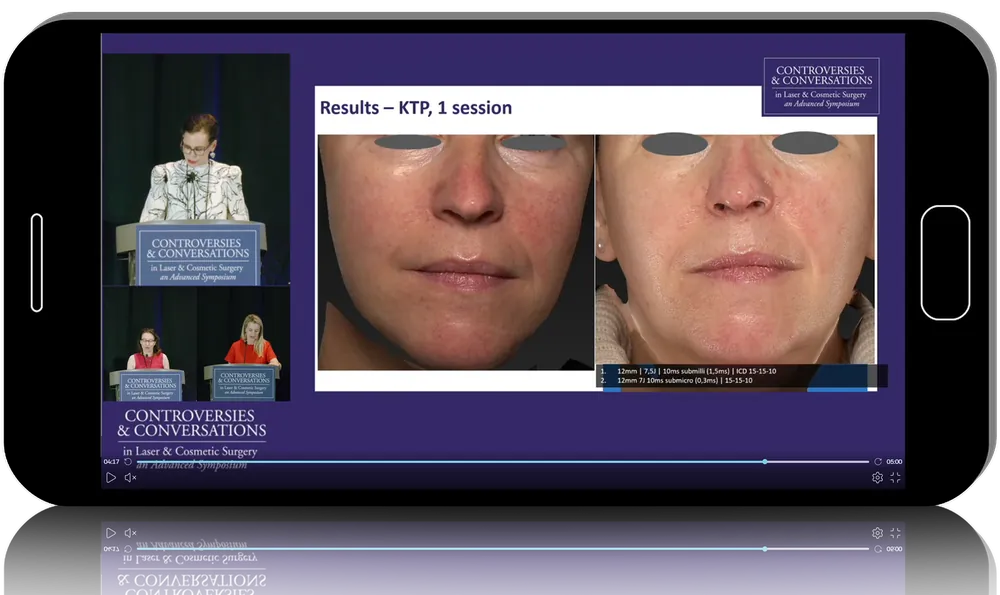
Advanced Clinical Perspectives: Navigating Cosmetic & Laser Conflicts records a controversies-style symposium where more than forty speakers, among them Roy Geronemus, Suzanne Kilmer, Christopher Zachary, Jean Carruthers, Joel Cohen, Jason Pozner and E. Victor Ross, test the claims behind current devices and treatments. Four modules pack two short talks into most lessons, from RF microneedling and 1726 nm lasers to scar revision, pigment in darker skin, complications and med-spa regulation.
- 4modules
- 32lessons
- ~4 hof talks
- 40+speakers
What you’ll be able to do
- Judge claims for ultrasound, monopolar RF, RF microneedling and microwave devices against the evidence presented
- Compare laser options for port wine stains, vascular lesions, scars and keloids
- Adapt resurfacing and pigment treatment for skin of colour, including melasma and PIH
- Recognise serious adverse events such as filler-related vision loss and post-laser infection
- Think through the psychological and regulatory side of cosmetic practice, from unhappy patients to US med-spa oversight
Inside the course
Devices under scrutiny
The first module asks whether aesthetic ultrasound is a fad, whether water works as a laser coolant, and how RF needling, 1726 nm acne lasers and focal point platforms perform, ending with support for discontinued lasers and the use of AI.
Clinical strategies
Nine lessons cover KTP and IPL for difficult port wine stains, 2910 nm and non-ablative YAG work on surgical scars, TCA plus resurfacing for acne scarring, laser heating for basal cell carcinoma, scleroderma and eyelid rejuvenation with histology.
Dermatology, injectables and AI
Short talks compare KTP with PDL for rosacea, review topical and laser answers to hyperpigmentation, test RF microneedling in hidradenitis, compare botulinum toxin products and even touch on ChatGPT and mitochondrial transplantation.
When things go wrong
The final module gathers complications from peels, lasers, coring and microneedling with vitamin C, the arnica debate, the emotional fallout of bad outcomes, patient communication and fragmented US regulation.
Built for
- Dermatologists and laser surgeonsA quick scan of where expert opinion currently sits on popular devices.
- Plastic surgeons running a laser serviceBalanced views before investing in new equipment.
- Aesthetic physiciansComplication and skin-of-colour sessions sharpen everyday safety decisions.
Curriculum
Module 1 — Energy-Based Devices & Technologies (55 min) 8 lessons
- Ultrasound in Aesthetic Medicine: Powerful Tool or Passing Fad?
- Is Water an Effective Laser Cooling Medium?; Face Forward: New Horizons in Non-Invasive Facial Contouring
- Radiofrequency Needling Compared with RF Needling Using Thulium Laser; Quantum RF Systems
- Next-Level RF Microneedling for Tissue Tightening & Lifting; Regulatory Considerations
- Monopolar RF for Skin Firming; Emerging Microwave-Based Device
- Scientific Basis of 1726 nm Lasers; Acne Clinical Trial Data
- Focal Point Laser Platforms; Laser Treatment Strategies for Darker Skin Types
- Supporting Laser Devices After Production Ends; Using AI to Enhance Aesthetic Results
Module 2 — Clinical Applications & Treatment Strategies (1 h 10 min) 9 lessons
- Cutting-Edge Management of Vascular Lesions; Advanced Port Wine Birthmark Therapies
- Optimizing KTP Laser for Challenging PWS Cases; Smart IPL Broad Band Light Applications
- Surgical Scar Therapy Using Non-Ablative YAG Laser; 2910 nm Laser Techniques for Scar Revision
- TCA with Resurfacing for Acne Scars; Long-Pulsed Nd:YAG in Treating Scars & Keloids
- Emerging Strategies for Acne & Rosacea (1726 nm); The Future of Ablative Resurfacing in 2025
- Precision Laser Heating in BCC Care; AI-Driven, Personalized Dermatologic Treatment
- Aesthetic Interventions in Scleroderma; Energy-Based Devices for Medical Dermatologic Conditions
- Ablative Fractional Resurfacing in Skin of Color; Picosecond Lasers Below Whitening Thresholds for Pigment Disorders
- Eyelid Rejuvenation Using the UltraClear 2910 nm Laser; Correlative Histologic Evaluation
Module 3 — Injectables, Dermatology & Aesthetic Therapies (48 min) 7 lessons
- ChatGPT in Practice; Rosacea – Comparing KTP to PDL Effectiveness
- Aesthetic Approaches in Scleroderma; AI-Based Models for Cosmetic Patients
- Emerging Topical Options for Hyperpigmentation; Expert Pigmentary Insights
- Laser Strategies for Melasma; Managing PIH-Related Complications
- RF Microneedling in Hidradenitis Suppurativa; Assessment of the 1726 nm Laser
- Fractional CO2 Laser Use in Darker Skin Types; BoNT-A Treatment Comparisons
- Advances in Cosmetic Dermatology; Exploring Mitochondrial Transplantation
Module 4 — Complications, Safety & Practice Management (1 h) 8 lessons
- Adverse Outcomes from Chemical Peels, Lasers & Energy-Based Devices; Managing Filler-Related Complications
- Complications in Ablative Laser Resurfacing; Techniques and Risks of Laser Coring
- Post-1927 nm Laser Infections Involving Animal Pathogens; Adverse Reactions to Microneedling with Vitamin C
- Vision Loss Associated with Aesthetic Filler Use; Pre-Mohs Photodynamic Therapy
- Controversy Around Arnica for Bruising; Strategies for Handling Dissatisfied Cosmetic Patients
- Neuromodulators and Their Psychosocial Consequences; Emotional and Psychological Sequelae of Cosmetic Complications
- Using Scientific Terminology in Patient Communication; Approaches to Liposuction
- Regulatory Challenges; Fragmented Oversight in the U.S. MedSpa Landscape
Additional session 1 lesson
- Myth-Deconstructing Lasers & Energy-Based Devices; AI Disco Session
Before you buy
How deep does each talk go?
Not very deep. About 64 topics share roughly four hours, so most presentations are brief position statements rather than full lectures.
Is it mostly surgery?
No. Although filed under plastic surgery, the programme is dominated by lasers, energy devices and cosmetic dermatology; operative surgery barely features.
Are the device discussions tied to specific brands?
Some talks are built around named platforms such as a 2910 nm laser, so part of the content reflects individual products and early data.
Do I get CME credit or a certificate?
No. Clinicapedia provides the educational content only — no CME or CE credits, MOC points or certificates of completion are included with this product.
Specifications
| Format | Recorded symposium talks |
|---|---|
| Faculty | Geronemus, Kilmer, Zachary, Carruthers, Cohen, Ross and others |
| Contents | 4 modules · 32 lessons plus one extra session |
| Duration | About 4 h |
| Language | English |
| Department | Plastic Surgery |
| Delivery | Instant download · lifetime re-download |
Related products
Plastic Surgery

General Surgery

Addiction Medicine

Plastic Surgery
QMP Art and Craft of Rhinoplasty Perfecting Technique Through Cadaver Dissection 2026


Plastic Surgery