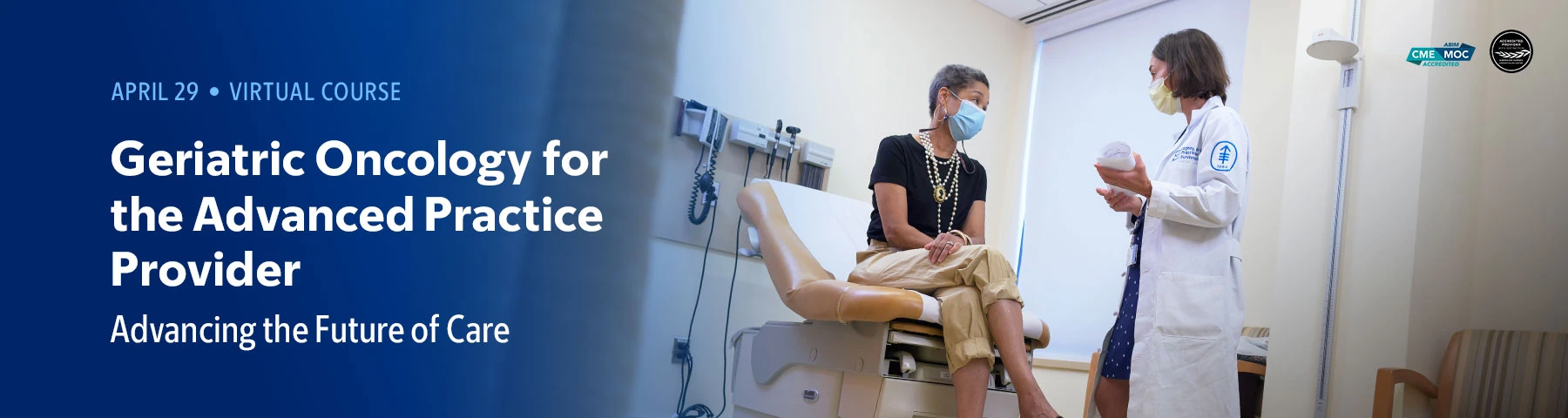
MSKCC Geriatric Oncology for the Advanced Practice Provider Advancing the Future of Care 2025
$20.00
VideoCourse · Geriatric Oncology · 2025
The MSKCC Geriatric Oncology APP one-day course equips advanced practice providers with the assessment tools and clinical strategies needed to manage cancer in older adults — from geriatric vulnerability screening to tailoring chemotherapy and immunotherapy regimens.
-
17video lectures
-
3.53 GBlibrary
-
2025edition
- 14 companion PDFs with slides, evidence summaries, and case materials
- Covers GLP-1 receptor agonist effects on cancer outcomes and aging biology in clinical practice
- Designed specifically for APPs, nurses, and therapists caring for older oncology patients
One-Day MSKCC Course Advancing Cancer Care for Older Adults
The MSKCC Geriatric Oncology APP course brings together oncology specialists and aging-research scholars to address the unique challenges of treating cancer in older patients. Across 17 recorded lectures, you will learn to apply geriatric assessments, recognize polypharmacy risks, translate aging biology into treatment decisions, and expand older-adult representation in clinical trials.
-
17video lectures
-
14companion PDFs
-
3.53 GBlibrary
-
2025edition
Inside this resource
Geriatric assessment and vulnerability screening
A foundational session walks you through the comprehensive geriatric assessment as applied to cancer patients — how to identify functional decline, cognitive impairment, and psychosocial risks before treatment begins. You will learn practical frameworks for assessing vulnerability in older adults who are receiving chemotherapy, immunotherapy, or radiation, and for matching treatment intensity to the patient’s overall reserve.
Cancer-specific treatment strategies for older adults
Six lectures tackle organ-specific malignancies: advanced lung cancer, breast cancer, colorectal carcinoma, bladder cancer, and prostate cancer. Each session focuses on how age-related physiology changes the risk-benefit calculation of standard therapies, and how emerging novel agents can be balanced against comorbidity burden and frailty.
Polypharmacy, prescribing, and pharmacology
A dedicated session on prescribing for older adults with cancer addresses the collision between oncologic regimens and the medications older patients already take. You will examine real-world polypharmacy scenarios and learn strategies for deprescribing, dose adjustment, and monitoring drug interactions in the geriatric oncology population.
Research, clinical trials, and emerging science
Sessions on translating aging biology into clinical care and bridging the research divide in cancer treatment for older adults confront the persistent under-representation of seniors in oncology trials. A presentation on GLP-1 receptor agonists and cancer outcomes adds a timely pharmacology angle, linking metabolic disease management to oncologic prognosis.
Who this serves
- Advanced practice providers — nurse practitioners and physician assistants managing older oncology patients in outpatient and inpatient settings
- Registered nurses and CRNAs — clinicians who coordinate chemotherapy cycles, monitor treatment toxicity, and counsel patients on survivorship
- Physical and occupational therapists — rehabilitation professionals supporting functional independence during and after cancer treatment
- Residents and fellows — trainees building foundational knowledge in geriatric oncology across surgical and medical disciplines
Faculty & syllabus
Sessions covered 17 lectures
- Geriatric Oncology: Where We Have Been and Where We Are Going
- Caring for the Older Population with Advanced Lung Cancer
- GLP-1 Receptor Agonists and Cancer Outcomes
- How Do We Tailor Treatment for Bladder and Prostate Cancer in the Older Adult
- Management of Breast Cancer in the Older Adult
- Management of Colorectal Carcinoma in Older Adults, Balancing Risks and Benefits of Novel Therapies
- Practical Assessment and Management of Vulnerabilities in Older Patients Receiving Cancer Therapies
- Prescribing for Older Adults with Cancer
- Rising Tide, Limited Data: Bridging the Research Divide in Cancer Treatment for Older Adults
- Translating Aging Biology Research to the Care of Older Adults with Cancer
- Case Study
- Q&A: Advancing Geriatric Oncology Knowledge for the APP
- Q&A: Emerging Care Strategies for the Older Adult with Cancer Part I
- Q&A: Emerging Care Strategies for the Older Adult with Cancer Part II
- Q&A: Geriatrics — Novel Care Beyond the Hospital
Before you buy
Is this course limited to APPs?
While designed for advanced practice providers, the content is open to registered nurses, CRNAs, physicians at all training levels, respiratory and physical therapists, occupational therapists, social workers, and case managers who care for older adults with cancer.
Does the course include PDF companion materials?
Yes — 14 PDFs ship alongside the 17 video lectures, containing slides, evidence summaries, and case documentation.
The chart
| Format | Video course (17 videos + 14 PDFs) |
|---|---|
| Duration | One-day course |
| Size | 3.53 GB |
| Year | 2025 |
| Publisher | Memorial Sloan Kettering Cancer Center |
| Department | Geriatric |
| Delivery | Instant download after checkout · lifetime re-access |
Verified original fileInstant downloadEncrypted checkout
6 reviews for MSKCC Geriatric Oncology for the Advanced Practice Provider Advancing the Future of Care 2025
Add a review
Related products
Pulmonary /Respiratory
Addiction Medicine
The Passmachine Addiction psychiatry Board Review Course 2021 videos interactive +Qbank PDFs

Pulmonary /Respiratory
The Brigham Board Review and Comprehensive Update in Pulmonary Medicine 2025 (Videos + Slides)

Addiction Medicine
Karen W. –
The GLP-1 receptor agonist and cancer outcomes lecture was eye-opening. Exactly the kind of translational research I wanted to understand for my older oncology patients.
J. Liu –
As an NP working in oncology, this was tailored perfectly for APPs. The geriatric vulnerability screening tools I learned here are already in my clinical workflow.
Michael Torres –
17 videos and 14 PDFs for the price is good value. The polypharmacy session helped me rethink medication lists for patients on chemo. One day was dense but manageable.
Anita R. –
Decent content but I was hoping for more surgical oncology cases. Most of the cancer-specific sessions focused on medical oncology. Still useful for the assessment framework.
David Okafor –
The comprehensive geriatric assessment lectures were practical and immediately applicable. The 3.53 GB file size was easy to manage. Would love a Part 2 with more case studies.
Lisa Fernandez –
Finally a course that bridges aging biology and clinical trial design for older adults. The session on increasing geriatric representation in trials was exactly what our field needs.