
AAOS/OTA Orthopaedic Trauma Update in Tactics and Techniques 2022 (Videos)
$40.00
VIDEO COURSE · Orthopedics · 2022
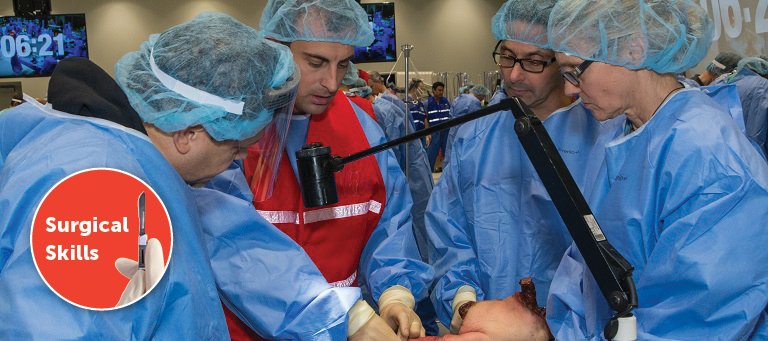
Lectures, live surgical demonstrations, and over 6.5 hours in the cadaver lab define the orthopaedic trauma techniques course from AAOS and OTA — covering fracture management across the anatomical areas from femoral neck approaches to wrist and forearm techniques.
-
6.5+lab hours
-
12lab stations
-
2022year
- External fixation for knee and ankle spanning
- Femoral neck, distal femur, and tibial plateau approaches
- Pilon/ankle, talus, calcaneus, and humerus approaches
- Open and minimally invasive surgical techniques
AAOS/OTA orthopaedic trauma — fracture management tactics and techniques
The orthopaedic trauma techniques course from AAOS and OTA delivers the latest treatment strategies for managing fractures across the anatomical areas through a blend of lectures, live surgical demonstrations, and case reviews — followed by over 6.5 hours in the cadaver lab practicing open and minimally invasive surgical approaches. Renowned trauma specialists walk you through procedures that incorporate relevant anatomy, implant position, and clamp position for fracture fixation.
-
6.5+lab hours
-
12lab stations
-
2022year
Inside this resource
Lower extremity fracture approaches
The lab covers knee and ankle spanning external fixation, anterior and anterolateral approaches to the femoral neck, distal femur medial and lateral approaches, tibial plateau fracture approaches, leg fasciotomies, and pilon/ankle approaches. Each station emphasizes the anatomy and implant positioning that determine fixation success — the details that separate a stable construct from one destined to fail.
Talus, calcaneus, and upper extremity approaches
The curriculum extends to dual talus and calcaneus approaches, proximal humerus fracture approaches, humerus shaft approaches, elbow approaches, and forearm approaches and fasciotomies. The wrist station rounds out the upper extremity coverage. This comprehensive anatomical range ensures you build skills across the full body rather than focusing on a single region.
Open and minimally invasive techniques
Both open and minimally invasive surgical approaches are practiced in the lab, giving you the judgment to choose the right exposure for each clinical scenario. The blend of lectures and live surgical demonstrations before lab time ensures you understand the rationale behind each approach before picking up instruments. Case reviews ground the technical sessions in real trauma scenarios.
Who this serves
- Orthopaedic trauma surgeons — technique refinement and exposure to the latest fixation strategies
- Orthopedic surgery residents — hands-on lab experience across multiple anatomical regions
- Orthopedic surgeons transitioning to trauma practice — comprehensive approach training from a trusted source
The chart
| Format | Lectures + live demos + cadaver lab |
|---|---|
| Lab Hours | 6.5+ hours |
| Year | 2022 |
| Publisher | AAOS |
| Department | Orthopedics |
| Delivery | Instant download after checkout · lifetime re-access |
Verified original fileInstant downloadEncrypted checkout
5 reviews for AAOS/OTA Orthopaedic Trauma Update in Tactics and Techniques 2022 (Videos)
Add a review
Related products
Orthopedics
Orthopedics
Robert J. –
This course modernized my approach to fracture management. The emphasis on anatomy, implant position, and clamp position for each station gave me practical details that directly improve my surgical outcomes. Highly recommended.
Marcus W. –
AAOS and OTA delivered a world-class trauma course. The live surgical demonstrations before lab practice gave me the confidence to try new approaches. The case review sessions connected the technical skills to real clinical decision-making.
Kevin P. –
The 6.5 hours of lab time covering 12 different approach stations is an incredible value. Practicing femoral neck approaches and external fixation on cadavers under trauma specialist guidance was transformative for my practice.
Sarah T. –
Well-organized across the anatomical areas with good faculty-to-participant ratios in the lab. The fasciotomy stations were particularly practical. The blend of open and minimally invasive approaches reflects current practice patterns.
Diana L. –
Comprehensive trauma course with excellent lab stations. The tibial plateau and pilon approaches were particularly well-organized. I would have liked more time on the humerus stations but the overall experience was strong.