
psychwire Treating Self-injury 2024

$10.00
Video Course · Self-Injury · 2024
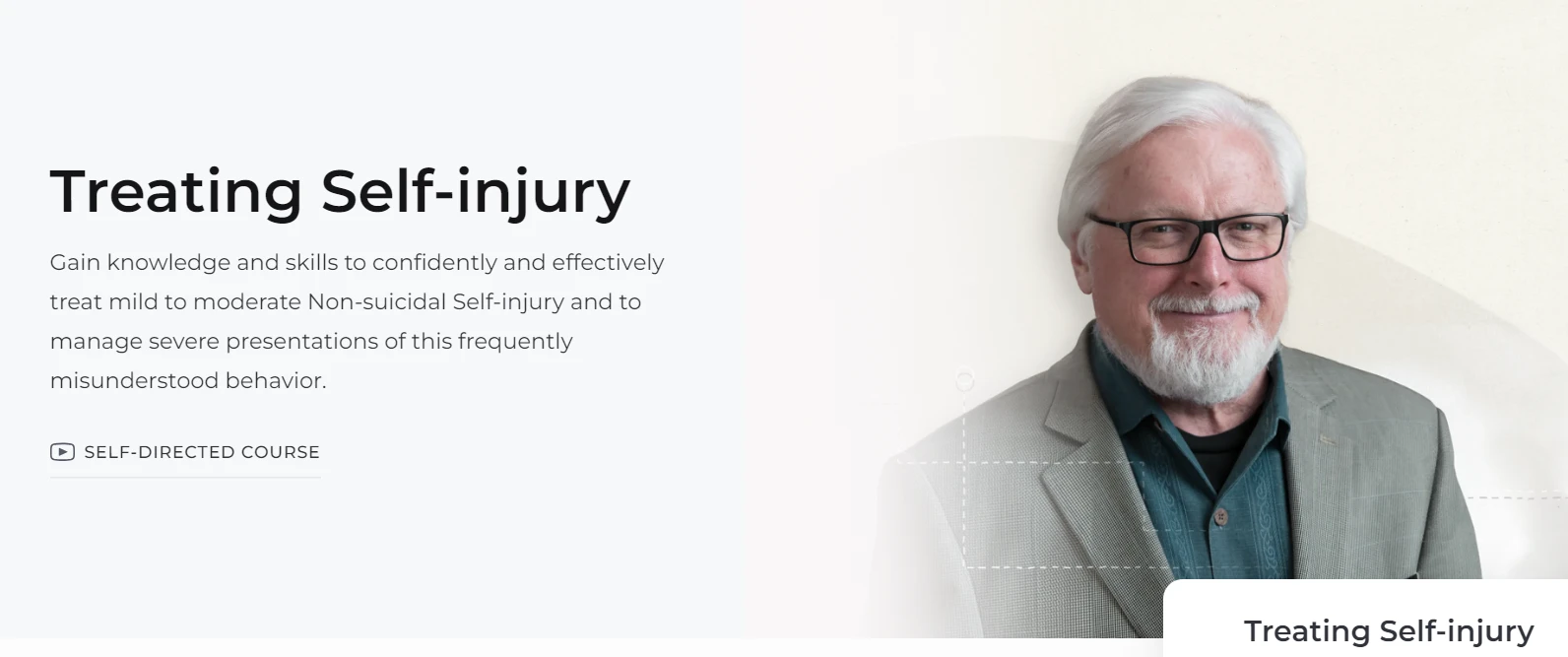
The treating self-injury course from psychwire features global authority Barent Walsh and leading experts delivering CBT and DBT strategies for managing non-suicidal self-injury in clinical practice.
-
2024edition
-
Barent Walshlead expert
- Covers NSSI function, comorbidities, and evidence-based treatment
- Teaches CBT strategies and DBT interventions for self-injury
- Includes realistic role-plays and case studies
- Addresses risk management and referral for severe presentations
Expert-Led Training on Best Practice Treatment of Non-Suicidal Self-Injury
The treating self-injury course from psychwire brings together global authority Barent Walsh and other leading experts to teach clinicians how to understand and effectively treat non-suicidal self-injury (NSSI). The course covers the function of self-injury, its comorbidities, and best-practice treatment approaches using CBT and DBT frameworks, with realistic demonstrations that build clinical confidence.
-
2024edition
-
Barent Walshlead expert
Inside this resource
Understanding NSSI: Function and Comorbidities
The course begins by defining non-suicidal self-injury and differentiating it from suicidal behaviors. You learn how NSSI functions to alleviate emotional discomfort and explore the comorbid conditions — anxiety, depression, borderline personality disorder — that frequently co-occur with self-injury presentations.
CBT and DBT Treatment Strategies
Clinicians learn practical CBT strategies and a range of DBT interventions for working with clients who engage in mild to moderate self-injury. The course teaches how to validate NSSI without condoning it, engage resistant clients, and increase willingness to change through evidence-based techniques.
Role-Plays, Case Studies, and Risk Management
Full of realistic role-plays and revealing case studies, this treating self-injury course demonstrates how to manage risk and handle setbacks during treatment. You also learn when and how to refer severely affected clients for full modal DBT programs.
Building Clinical Confidence
A core goal is helping clinicians overcome professional fear and feel competent in treating people with NSSI. The course covers distraction techniques, relapse prevention, and practical tips for integrating self-injury treatment into broader clinical practice.
Roster
- Barent Walsh — global authority on self-injury, course lead expert
- psychwire Clinical Faculty — leading experts in CBT and DBT for self-injury
Frequently asked questions
Is this course suitable for clinicians without prior DBT training?
Yes, the treating self-injury course teaches DBT interventions from foundational principles, making it accessible for clinicians new to dialectical behavior therapy approaches.
Does the course address suicidal self-injury as well?
The focus is specifically on non-suicidal self-injury (NSSI), teaching clinicians how to differentiate it from suicidal behaviors and tailor treatment accordingly.
How are the role-play demonstrations structured?
Realistic role-plays demonstrate clinical encounters with clients who have varying levels of self-injury severity, showing practical application of CBT and DBT strategies in real-time.
At a glance
| Feature | Detail |
|---|---|
| Format | Video course |
| Lead Expert | Barent Walsh |
| Focus | Non-suicidal self-injury |
| Methods | CBT and DBT strategies |
| Includes | Role-plays, case studies, tips |
| Provider | psychwire |
5 reviews for psychwire Treating Self-injury 2024
Add a review
Related products

Psychiatry


Psychiatry

Pulmonary /Respiratory
The Brigham Board Review and Comprehensive Update in Pulmonary Medicine 2025 (Videos + Slides)
James L. –
Solid content on CBT and DBT strategies but the course could benefit from more diverse case studies. The case examples presented were limited in demographic range.
Karen M. –
Barent Walsh’s teaching on the function of NSSI completely changed how I approach these patients. The validating-without-condoning framework was immediately applicable in my next session.
Sarah K. –
Finally felt confident enough to work with NSSI clients after completing this course. The risk management and referral guidance for severe cases was exactly what I needed.
David R. –
The treating self-injury course had excellent role-plays showing real clinical dynamics. The DBT interventions were practical and well demonstrated. Would have liked more on adolescent-specific presentations.
Priya N. –
The distraction techniques and relapse prevention sections were particularly useful for my practice. Walsh’s expertise is evident throughout. Good course for building NSSI treatment competency.