

DentistryOnline courseProsthodontics
Vertical preparation from first bur stroke to cemented crown — 24 lessons for the dentist and technician team
Italian general dentists Marco Maiolino and Pasquale Venuti, co-founders of the Tomorrow Tooth group, teach Vertical Preparation Protocols: The Complete Guide in 24 Lessons from Tomorrow Tooth across about 15.5 hours. They explain why and when to prepare without a finish line, how the flame-shaped bur and toe-heel movement shape hard and soft tissue, and then cover provisionals, impressions, die work, cementation and the biomechanics that keep restorations intact.
- 24lessons
- 15 h 29 minof video
- 2instructors
What you’ll be able to do
- Tell edgeless, shoulderless and shoulder preparations apart and match each to the case
- Prepare with the flame-shaped bur using the toe-heel concept while controlling depth with a silicone key
- Manage deep subgingival and endodontically involved teeth with margin elevation and ferrule strategies
- Make and reline provisional crowns, analog or designed in Exocad, that shape the gingiva
- Take reliable analog and digital impressions of vertical margins and set up dies and spacer correctly
- Select restoration thickness, material and cement on biomechanical grounds
Inside the course
The case for going vertical
Opening lessons define the technique, answer common objections, explain why it suits periodontally compromised teeth and compare it with BOPT and conventional margins, including how the bur actually moves and what can go wrong.
Biomechanics before aesthetics
Two 90-minute lessons explore the tooth–cement–restoration complex, crack formation, marginal ridges, ferrule, adhesive limits and crash tests on extracted teeth, giving the reasoning behind wall thickness and material choices.
Provisionals and the lab side
Detailed protocols cover temporary crown margins, contacts, occlusion and relining, then move to space management, die trimming and spacer settings for frictional versus cement fit, contact-point troubleshooting and cementation strategies.
Impressions and a full interdisciplinary case
Analog two-step and putty techniques sit alongside intraoral scanning criteria. A closing three-part case combines digital planning, a composite jig for raising vertical dimension, facebow transfer, milled PMMA provisionals and final digital restorations.
Built for
- Prosthodontists and restorative dentistsA structured route into a technique that is often learned by trial and error.
- Dental techniciansDie preparation, spacer and thickness guidance written for vertical margins.
- General dentists placing crownsA lesson on beginner mistakes shortens the learning curve.
Curriculum
Why Verti-prep? (32 min) 5 topics
- Vertical approach: working with hard and soft tissues
- 9 benefits of vertical preparation
- Indications for vertical preparation
- Long-term results of vertical preparation
- Clinical and laboratory prosthetic workflows. Tips.
Definition and development of vertical preparation (23 min) 7 topics
- Why Vertical Preparation is underused? Prejudices about Vertiprep
- How to define a vertical preparation
- Difference between feather and knife edge
- Edgeless and shoulderless preparation
- Conceptional differences between margin and non- margin preparation
- What is Batt bur in prosthodontics used for?
- Why is vertical preparation friendly for periodontally compromised patients?
Review of preparation methods (12 min) 6 topics
- Comparison of soft tissue condition with provisional restorations and without
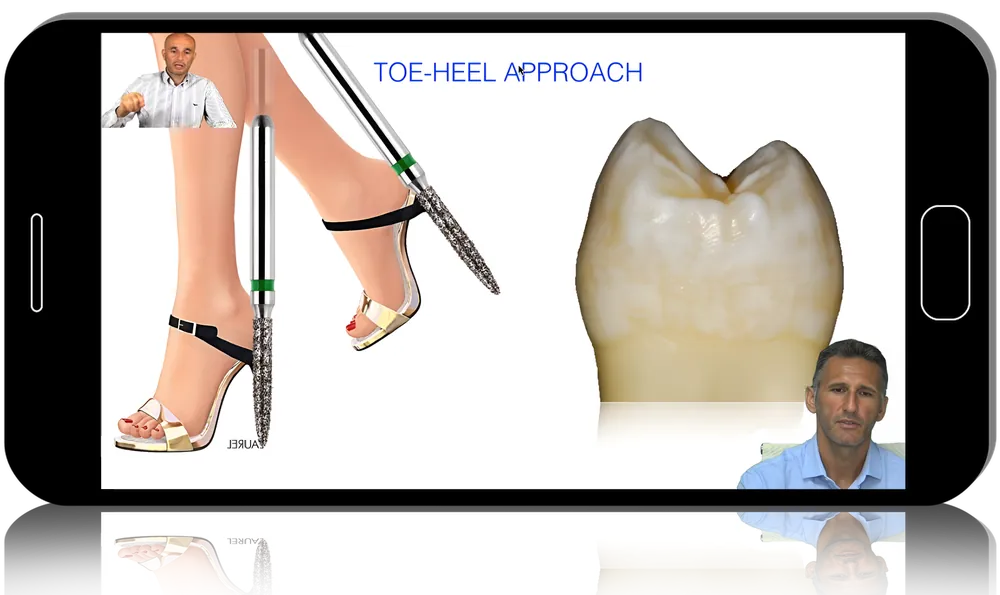
- Toe-Heel approach that solves many issues
- BOPT and Vertiprep: edgeless strategy
- Geometry of Batt bur
- Establishment of undesired ridges, shoulders and irregularities
- How does the bur move while preparing vertically. Possible side effects.
Preparation with flame-shaped and butt bur (38 min) 7 topics
- What is the Batt bur used for in the prosthetic dentistry?
- The Toe-Heel Concept
- Mechanics of flame-shaped bur tooth preparation
- Problems related to the preparation of the tooth and soft tissues around it
- Preparation technique of hard tissues under the crown using the Batt bur
- Advantages of the Batt bur usage
- Analysis of clinical cases and long-term results
The difference between edgeless and shoulderless approaches (34 min) 9 topics
- Analysis of a clinical case of prosthetic restoration of a severely destroyed molar using vertical preparation:
- The creation of the crown insertion path
- Filling of subgingival undercuts
- Preparation of the tooth and soft tissues
- Permanent prosthetic restoration.
- X-ray follow-up of the tooth condition and periodontal tissues when deciding on the use of vertical preparation
- Features of endodontic preparation of the tooth before vertical preparation
- Analysis of a clinical case involving the preparation of a frontal teeth with a shoulder and taking an impression
- Preparation of the tooth for digital impression after vertical preparation.
Tooth preparation techniques (20 min) 4 topics
- The technique of maximum enamel saving
- The selective preparation technique
- Indications and contraindications for each of the techniques
- Rules of vertical and horizontal rationality.
Design of a shoulder (19 min) 4 topics
- Critical biomechanical zones of the tooth
- What is a shoulder and what is it used for?
- Features of preparation, finishing the abutment and impression taking
- Analysis of the clinical case.
Restoration of teeth with deep subgingival and endodontic lesions (1 h 04 min) 7 topics
- The biological width of the tooth, and how it is affected by various factors?
- X-ray assessment of the condition of periodontal tissues. When should I reject performing of the restoration?
- Risks of furcation lesions during surgical extension of the tooth crown
- Gingival margin expansion and deepening technology (DME and DLE)
- Analysis of clinical cases of dental restorations with extensive subgingival defects
- Analysis of clinical cases of restoration of teeth with odontogenic cutaneous sinus tract (OCST)
- Non-standard and extra-complicated clinical cases.
Biomechanics of restorations. Part 1 (1 h 32 min) 13 topics
- Structure of the complex “tooth-cement-restoration”
- “Crackology” – the science of broken restoration. Why is this happening?
- Physical properties of substances that affect the durability of restorations
- The forces that affect the restoration in the oral cavity
- Save or remove the dentin overhanging edges? How to increase the strength of the tooth after restoration?
- Internal and external strength of tooth tissues. “Invisible” fractures
- A strategic approach to the prevention and treatment of tooth fractures and chipped restorations
- The importance of preserving the edge ridges to achieve long-term restorations
- Crash tests of removed teeth
- Is it true that adhesive restorations strengthen the tooth? Breaking the Myths of composite and amalgam
- Structural analysis of the tooth. Optimal depth and width of preparation
- The importance of the anterior guidance in biomechanics and gnathology
- Why is it important to correctly reproduce tooth cusps?
Biomechanics of restorations. Part 2 (1 h 32 min) 14 topics
- Advantages and disadvantages of the adhesive protocol. Analysis of the clinical case
- Stress factors of adhesive restoration
- Borders of the adhesion. When is it possible to carry out an adhesion?
- Features of adhesion to enamel and dentin
- Features of enamel and dentin preparation for the adhesive protocol
- Which adhesive should I choose?
- The thickness of the tooth walls for the choice of treatment method
- Analysis of errors in the implementation of the adhesive protocol in various clinical cases
- Adhesion of various materials to tooth tissues
- The importance of ferrule preservation in adhesive restoration
- Ferrule as the most important factor of tooth strengthening after endodontic treatment
- Creating a ferrule effect
- Increasing the clinical height of the tooth crown
- Overview and step-by-step analysis of clinical cases.
Provisional restoration (50 min) 7 topics
- Provisional restorations are a necessary stage for successful prosthetics
- Margins of provisional restorations. Working with soft tissues
- Interproximal contacts of provisional restorations
- Occlusal contacts of provisional restorations
- Relining of provisional restorations
- Materials for provisional restorations
- Detailed protocol for creating provisional restorations in the oral cavity.
Provisional prosthetics (1 h 03 min) 9 topics
- How to avoid interference between the provisional crown and the tooth?
- The main errors that occur at the clinical and laboratory stages in the manufacture of temporary crowns
- A confirmed and recognized approach to provisional prosthetics. Clinical cases
- Stages of manufacturing of analog (classic) provisional restorations
- Manufacturing provisional restorations for posterior teeth
- Manufacturing provisional restorations for anterior teeth
- Stages of manufacturing digital temporary crowns using Exocad
- Tricks and lifehacks of provisional prosthetics
- Analysis of clinical cases.
A free space management in the vertical preparation technology (43 min) 5 topics
- Pros and cons of having a free tooth/abutment height
- The optimum thickness of the restoration
- The relationship between reliability, aesthetics and long-term restoration
- Reasons of chipping of restorations at the stages of fitting and chewing
- Geometry and biomechanics of dental preparation for indirect restorations.
Indirect restoration thickness and material (27 min) 6 topics
- Mechanical principles for the selection of the thickness and material of the restoration
- Occlusal principles for the selection of thickness and material of restorations
- Comparative characteristics of various materials
- Comparative characteristics of different thicknesses
- The choice of material depending on the type of preparation
- Thickness of restoration: digital planning.
Edge and edgeless preparation. Impressions (22 min) 5 topics
- Edge and edgeless preparation: indications and contraindications, pros and cons
- Detailed comparative characteristics of edge and edgeless preparation
- Edge location
- Clinical case: restoration of a severely damaged tooth. Choice of preparation method
- Ideal time to take impressions.
Die preparation. Analog and digital methods (12 min) 4 topics
- Die preparation: tools and techniques
- Errors in the die preparation
- Features of the die preparation with digital and analog methods
- Features of the die preparation depending on the edge type.
Die spacer setting (30 min) 6 topics
- Pre-cementation retention (frictional fit)
- Post-cementation retention (cement fit)
- Die spacing improves post cementation retention
- Setting for inverted spacing
- Using digital technologies to calculate the spacing
- Processing of the gingival margin of the crown.
Indirect restoration cementation (52 min) 5 topics
- Materials for cementation of indirect restorations
- Comparative characteristics of fixing materials
- How to succeed in indirect restoration cementation
- Selection of the cement according to the material of the indirect restoration
- Clinical cases. Decision making strategy.
Managing contact areas (22 min) 4 topics
- Causes of crown fit problems
- Methods for troubleshooting the crown fitting process
- Tools for troubleshooting the crown fitting process
- Planning the ideal contact point using digital technology.
Vertical preparation. Provisional and final restorations (44 min) 8 topics
- Vertical preparation features
- Control of the preparation depth
- Using a silicone key
- Fabrication and fixation of provisional restorations
- Taking impressions: analog method
- Fabrication and fixation of final restorations
- Orthodontic treatment prior to prosthetics: indications
- Fixation of final restorations.
Your first Vertiprep. The most common mistakes for those who start (23 min) 1 topic
- Discussing common mistakes
Impression: analog method (34 min) 7 topics
- When to take impressions: perfect timing
- Analog VS digital impression: indications
- 2-stage impression (analog method)
- Working with soft tissues when taking an impression
- Impression materials: characteristics, pros and cons
- Putty impressions
- Impression preparation.
Impressions: digital approach (34 min) 9 topics
- Indications for digital impressions
- Analog VS digital impression
- Scanners. Short review
- Perfect scanning. Criteria for excellent scan result
- Undercuts analysis
- Features of taking impressions depending on the clinical case
- Soft tissue information
- Clinical case: restoration of a severely damaged tooth with milled crown
- Features of taking impressions depending on the preparation.
Keeping Information (1 h 42 min) 13 topics
- Prosthetic and surgical treatment of malocclusion: digital planning
- Use of surgical templates for implantation
- JIG in composite for increasing vertical dimension
- Impressions and bite registration using the facial bow
- Working with models in the articulator. WAX-UP
- Design and fabrication of provisional restorations, taking into account the VDO increase
- Intraoral scanning with provisional restorations
- Digital design and production of final restoration
- An interdisciplinary approach in the class 3 treatment
- Silicone key
- Milled provisional in PMMA
- Using Bis-Acrylic and a silicone key to obtain a provisional restorations
- Tips in using teflon when taking digital impressions.
Before you buy
Is this course included in a bundle as well?
Yes, it also appears inside the ten-course “Orthopedics: Restoring chewing efficiency” bundle, so skip it if you already own that.
Do I need any particular software?
No, although one provisional-crown lesson demonstrates digital design in Exocad.
Do I get CME credit or a certificate?
No. Clinicapedia provides the educational content only — no CME or CE credits, MOC points or certificates of completion are included with this product.
Specifications
| Format | Online video course |
|---|---|
| Instructors | Marco Maiolino, Pasquale Venuti |
| Contents | 24 lessons |
| Duration | 15 h 29 min |
| Audience | Prosthodontists, dental technicians, general dentists |
| Access | Lifetime, self-paced |
| Department | Dentistry |
| Delivery | Instant download · lifetime re-download |
Related products