

DentistryOnline courseManagement
Case acceptance through better conversations — 60 short lessons on patient communication, planning visuals and everyday questions
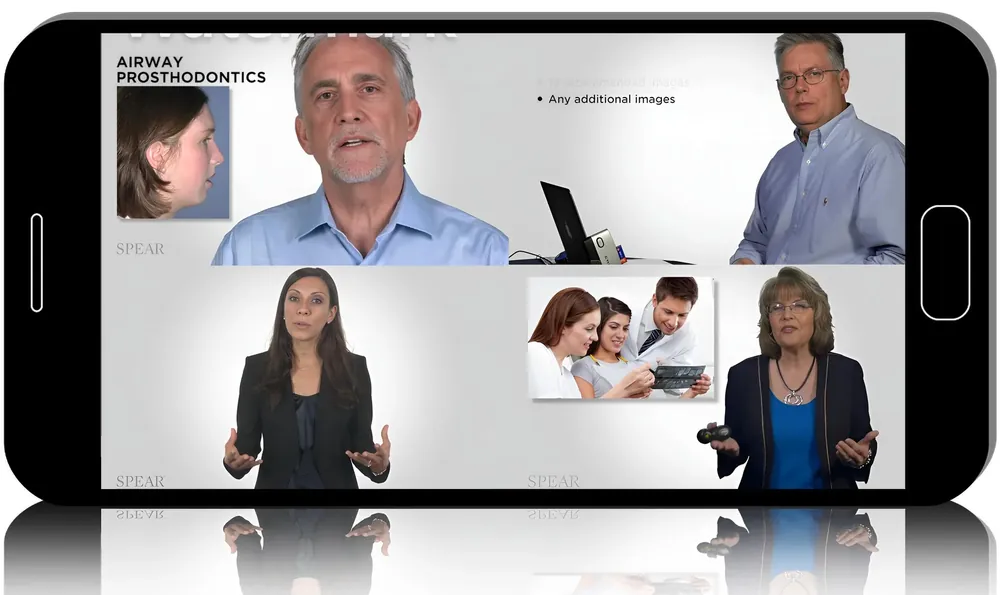
Frank Spear, Ricardo Mitrani, Jeff Rouse, Gary DeWood and six colleagues teach What Patients Really Ask: Communication, Education & Case Acceptance in Dentistry, a 7 h 33 min programme split into 5 modules and 60 bite-sized lessons. It covers the new-patient phone call, decision psychology and follow-up, medical history updates, a structured treatment-planning sequence, photo-based planning in Keynote on a Mac, and model answers to 25 questions patients ask most often.
- 5modules
- 60lessons
- 7 h 33 minof video
- 25patient questions answered
What you’ll be able to do
- Ask sharper questions on the new-patient phone call and first visit
- Understand how patients decide and handle negative feedback calmly
- Choose a case presentation model and build a follow-up strategy that sticks
- Plan treatment by problem and aetiology, including airway, phasing and decision trees
- Build visual plans from clinical photos in Keynote with esthetic and occlusal templates
- Give clear, calm answers to common patient questions from flossing to root canals
Inside the course
Communication foundations
The largest module, 17 lessons over about three hours, runs from phone scripts and emotional engagement to patient-education videos in the hygiene room, co-diagnosis, retention and personas that map each patient’s journey.
History and planning
Short modules explain why a regularly updated medical history matters, then lay out a patient-centred planning flow that weighs esthetics, function, structure and biology before phasing treatment.
Visual planning on a Mac
Nine practical lessons show how to manage and correct images, load them into a master template, plan anterior esthetics and occlusal planes on photos, and present the result to patients.
Answering real questions
The final module models concise replies about tooth replacement, electric brushes, piercings, amalgam, fluoride, crowding, nightguards, sore jaw muscles, bleeding gums and darkening teeth.
Built for
- Dentists presenting larger casesTools to explain complex plans so patients say yes with understanding.
- Hygienists and front-desk staffPhone, education and follow-up lessons suited to the whole team.
- Practice managersIdeas for retention systems and patient-education technology.
Curriculum
Module 1. Foundations of Effective Patient Communication (3 h 04 min) 18 lessons
- This module covers essential strategies for building trust, educating patients, handling objections, and guiding them through decisions—from the first phone call to follow-up care.
- Power Questions for the New Patient Phone Call
- Fundamentals of Patient Communication
- Communication Breakdown When Interacting with Patients
- Creating Emotionally Engaged Patients
- How Do Patients Make Decisions
- How to Handle Negative Feedback from a Patient
- Patient Education Overview for Mobile
- Patient Education Overview for Desktop
- Improve Patient Communication in the Hygiene Room
- Getting Started with Patient Education TV Apps
- Different Models for Case Presentation
- Communication and Patient Retention
- Co-Diagnosis and the Role of Patient Education Videos
- The Role of Follow-Up
- Developing a Strategy for Follow-Up
- Using Personas to Optimize a Patient’s Journey
- How to Jump-Start Patient Education Videos
Module 2. Medical Histories and Whole-Patient Understanding (53 min) 4 lessons
- Focuses on the importance of comprehensive medical and dental histories to provide personalized care and build patient trust.
- Finding Your Why
- Updating the Medical History of the Patient
- Additional Important Health Questions
Module 3. The Treatment Planning Process (51 min) 7 lessons
- Explores a structured, patient-centered approach to treatment planning, including diagnosis, esthetics, phasing, and decision-making tools.
- Incorporating Airway in the FGTP Process
- Identifying Problems and Possible Etiologies
- Esthetics, Function, Structure and Biology
- Creating the Desired Outcome
- Options for Phasing and Completion of Treatment
- Using Decision Trees
Module 4. Using Photos on the Mac to Treatment Plan (1 h 34 min) 10 lessons
- Demonstrates how to use photos and Keynote on a Mac for visual treatment planning, improving patient understanding and engagement.
- Image Management on the Mac
- Loading Images into Keynote
- Loading Images into the EFSB Master
- Correcting Images in Keynote
- Selecting, Copying, and Pasting Items in Keynote
- Treatment Planning Anterior Esthetics Using Templates
- Treatment Planning Occlusal Planes Using Templates
- Using the EFSB Guide Form with Photos
- Tips for Patient Presentations
Module 5. Answering the Questions Patients Really Ask (1 h 02 min) 26 lessons
- Provides clear, empathetic answers to common patient questions – boosting confidence, improving communication, and enhancing case acceptance.
- The Things I’ve Learned the Hard Way
- How Can My Tooth be Replaced
- Is an Electric Toothbrush Better than a Manual One
- My 17-Year-Old Daughter Wants to Get Her Tongue Pierced. What Should I Tell Her
- Other Than Cosmetic, Are There Other Benefits to Orthodontics
- Should I Replace My Silver Fillings With White Ones
- What is Periodontal Disease
- Why Should I See a Dentist If I’m Not in Pain
- Can My Teeth Give Me Headaches
- What’s Fluoride and Why is it Important for Dental Health
- What is an Underbite and What Problems Can It Cause
- What’s the Difference Between a Crown and an Onlay
- Why are my Teeth Becoming More Crowded
- Why Should I Floss Isn’t Brushing Enough
- Can Mouthwash Really Prevent Plaque
- How Can I Prevent Cavities
- How Do I Clean My Tongue
- What’s a Root Canal
- What’s That White Stuff Along my Gumline
- Is Denture Adhesive Safe
- What’s an Amalgam Filling and is it Safe
- What’s the Difference Between a Regular Nightguard and What You are Recommending
- Why are my Jaw Muscles Sore
- How Can I Treat Bleeding Gums
- Why Do Teeth Darken
Before you buy
Do I need a Mac?
Only the fourth module depends on it, since it demonstrates Keynote; the rest of the course is software-neutral.
Are some lessons tied to specific products?
A few lessons walk through patient-education apps on mobile, desktop and TV, which assume that type of tool is available in your practice.
How long is each lesson?
Most are short, averaging well under ten minutes, so they fit into team meetings.
Do I get CME credit or a certificate?
No. Clinicapedia provides the educational content only — no CME or CE credits, MOC points or certificates of completion are included with this product.
Specifications
| Format | Online video course |
|---|---|
| Instructors | Frank Spear, Ricardo Mitrani, Jeff Rouse and seven others |
| Contents | 5 modules · 60 lessons |
| Duration | 7 h 33 min |
| Access | Lifetime, self-paced |
| Department | Dentistry |
| Delivery | Instant download · lifetime re-download |
Related products



Dentistry


Addiction Medicine