
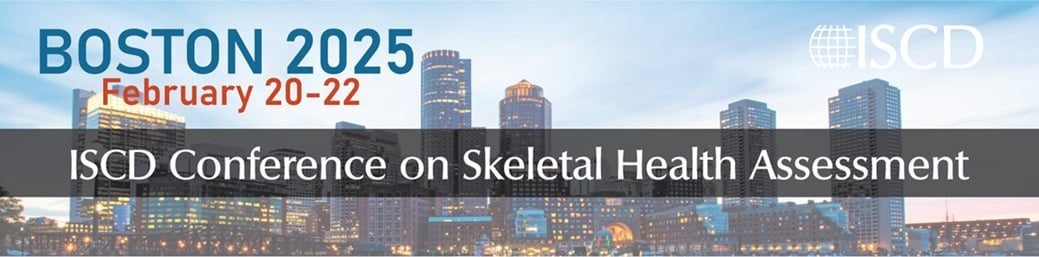
ISCD Conference on Skeletal Health Assessment 2025 (Videos + Slides)


$120.00
CONFERENCE · Orthopedics · 2025
Videos and slides from the ISCD Conference on Skeletal Health Assessment 2025 — held February 20–22, 2025 at the Hilton Boston Park Plaza, covering DXA interpretation, osteoporosis management, fracture detection with AI, sarcopenia, Paget’s disease, and bone health across the care spectrum.
-
3days
-
30+sessions
-
2025year
- DXA beyond BMD measurement and reporting with fewer than 4 vertebral bodies
- Fracture detection with AI, clinical pearls in Paget’s disease, and vitamin D controversies
- Anabolic and antiresorptive therapies for postmenopausal osteoporosis
- Sarcopenia, fracture liaison services, and prevention across the care spectrum
skeletal health assessment conference 2025 — three days of bone health education
The ISCD Conference on Skeletal Health Assessment 2025 reconvened February 20–22 at the Hilton Boston Park Plaza under its newly rebranded format, replacing the traditional annual meeting with a conference designed to alternate between live and virtual delivery. Videos and slides from all three days cover DXA interpretation beyond BMD measurement, osteoporosis treatment optimization, AI-assisted fracture detection, sarcopenia, Paget’s disease, vitamin D controversies, fracture liaison services, and bone health assessment in specialized populations. The curriculum serves technologists, clinicians, and researchers working in skeletal health.
-
3days
-
30+sessions
-
2025year
Inside this resource
DXA interpretation and bone density measurement
The conference opens with advanced DXA topics — measuring beyond BMD with trabecular bone score and other emerging metrics, reporting BMD when fewer than four vertebral bodies are available, and DXA in children treated with bisphosphonates. These sessions address the practical measurement challenges that technologists and clinicians face daily, moving beyond basic T-score interpretation into the nuance that determines clinical decision-making.
Osteoporosis treatment and fracture management
Multiple sessions address the treatment spectrum — optimal use of anabolic and antiresorptive therapies in postmenopausal osteoporosis, challenges of osteoporosis treatment across the spectrum of CKD, and treat-to-target approaches. AI-assisted fracture detection, fracture liaison service updates, and preoperative spine population management round out the fracture care pathway from detection through treatment optimization.
Emerging topics and special populations
Coverage extends to sarcopenia and musculoskeletal aging, vitamin D controversies, clinical pearls in Paget’s disease, hypoparathyroidism, hypophosphatasia, and bone health assessment in sports medicine and transgender individuals. The conference also addresses preventing osteoporosis as a missed opportunity — a prevention-focused session that challenges current clinical practice patterns.
Who this serves
- Clinicians managing osteoporosis — treatment optimization, DXA interpretation updates, and fracture prevention strategies
- DXA technologists — measurement techniques, protocol updates, and quality assurance across specialized populations
- Endocrinologists and rheumatologists — bone health assessment in complex patients including CKD, pediatric, and transgender populations
Before you buy
Is this the ISCD annual meeting?
It is the newly rebranded ISCD Conference on Skeletal Health Assessment — the successor to the traditional annual meeting, reimagined for alternating live and virtual formats.
Are slides included with the videos?
Yes — the package includes both video recordings and presentation slides from all sessions.
The chart
| Format | Videos + slides |
|---|---|
| Publisher | International Society for Clinical Densitometry |
| Department | Orthopedics |
| Delivery | Instant download after checkout · lifetime re-access |
Verified original fileInstant downloadEncrypted checkout
6 reviews for ISCD Conference on Skeletal Health Assessment 2025 (Videos + Slides)
Add a review
Related products


Orthopedics


Orthopedics


Robert K. –
The DXA beyond BMD measurement session was the highlight for me. The presenters covered trabecular bone score and emerging metrics with practical clinical context. Exactly the update I needed for my bone health clinic.
James M. –
Three days of dense, practical bone health education. The treatment optimization sessions — anabolic versus antiresorptive, treat-to-target, and CKD-specific challenges — are directly applicable to my endocrinology practice.
Linda S. –
Strong conference content across the skeletal health spectrum. The fracture liaison service updates and the prevention session were particularly thought-provoking. The AI-assisted fracture detection lecture was forward-looking.
Patricia W. –
Good breadth covering technologist and clinician perspectives. The DXA in children and the bone health in transgender individuals sessions address populations often overlooked in standard bone health courses.
David L. –
Content is solid but the conference format means variable production quality across sessions. The sarcopenia and vitamin D controversy lectures were standouts. Good value for bone health professionals.
Karen T. –
As a DXA technologist, the measurement technique sessions were invaluable. The vertebral body counting challenges and pediatric bisphosphonate monitoring addressed real problems I encounter in the department.