
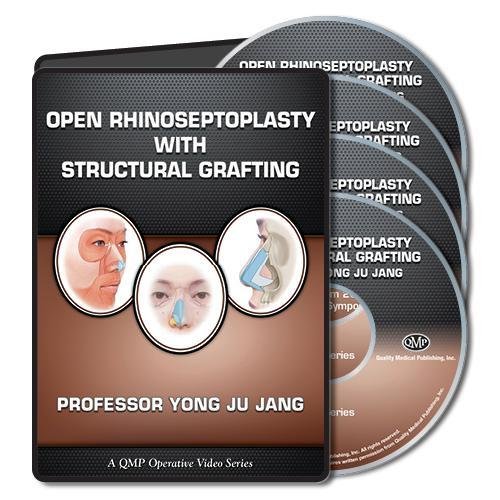
Open Rhinoseptoplasty With Structural Grafting QMP
$45.00
Video Course · ENT · 2020
This structural grafting rhinoseptoplasty course pairs two expert surgeons with cadaver dissection and operative video to teach cartilage harvesting, suturing, and nasal framework reconstruction.
-
3faculty
-
2020year
- Cartilage harvesting and shaping techniques on cadaver specimens
- Suturing patterns and structural reinforcement methods
- Operative video of full rhinoseptoplasty cases
- Moderated Q&A with Davids and Stucker
Structural grafting in rhinoseptoplasty — cadaver lab, operative video, and expert instruction
Drs. Davids and Stucker demonstrate how structural grafting rhinoseptoplasty principles apply across primary and complex cases through cadaver dissection and recorded surgical footage. The course moves through graft harvesting, shaping, and fixation techniques using both live cadaver specimens and full-length rhinoseptoplasty cases, showing how cartilage and septal grafts restore nasal framework stability.
-
3faculty
-
2020year
Inside this resource
Graft harvesting and shaping on cadaver specimens
A hands-on cadaver dissection anchors the educational experience, letting you watch graft placement, suturing patterns, and structural reinforcement in real time alongside the faculty. The cadaver environment provides realistic tissue conditions for practicing septal extension grafts, spreader grafts, and alar rim grafts — techniques that require tactile feedback to master. Each demonstration includes the reasoning behind graft selection and placement decisions.
Operative video of full rhinoseptoplasty cases
Operative video supplements the cadaver work with full-length rhinoseptoplasty cases, showing how the techniques practiced on specimens translate to live tissue with its attendant bleeding, swelling, and anatomical variation. The combination of cadaver lab and operative footage gives both the practice environment and the clinical reality, reinforced by a moderated Q&A with Drs. Davids and Stucker.
Framework reconstruction principles
Dedicated segments address the biomechanical principles underlying structural grafting — how spreader grafts restore the middle vault, how septal extension grafts control tip projection, and how alar strut grafts prevent nostril collapse. These foundational concepts connect the individual techniques into a coherent framework that you can apply to your own rhinoseptoplasty cases.
Who this serves
- Rhinoplasty surgeons — cadaver-based structural grafting training with master surgeons
- Facial plastic surgery fellows — hands-on technique development with clinical correlation
- Otolaryngology residents — foundational understanding of nasal framework reconstruction
Faculty
Surgeons 3 faculty
- Paul S. Davids MD — structural grafting and rhinoseptoplasty
- Fred J. Stucker MD — rhinoplasty and framework reconstruction
- J. Davis Rossmann MD
The chart
| Format | HD Streaming |
|---|---|
| Faculty | 3 surgeons |
| Publisher | Quality Medical Publishing |
| Department | ENT |
| Delivery | Instant download after checkout · lifetime re-access |
Verified original fileInstant downloadEncrypted checkout
6 reviews for Open Rhinoseptoplasty With Structural Grafting QMP
Add a review
Related products
Rachel K. –
The framework reconstruction principles section is the strongest part of the course. Understanding the biomechanics behind each graft type makes the technique decisions logical rather than arbitrary.
Lisa P. –
Well worth the investment for anyone doing structural rhinoseptoplasty. The graft harvesting and shaping modules are thorough, though I wanted more on revision cases.
Ahmed R. –
blending cadaver dissection with recorded surgical cases offers both the training setting and the real clinical context environment and the clinical reality. Dr. Stucker’s explanations during cases are particularly clear.
Sophie T. –
Structural grafting principles finally clicked for me after seeing the suturing techniques demonstrated in the cadaver lab. The connection between theory and practice is immediate.
Greg H. –
The cadaver dissection component elevates this above standard lecture-based programs. Watching Drs. Davids and Stucker demonstrate graft placement in real tissue was transformative.
Michael D. –
Drs. Davids and Stucker bring decades of rhinoplasty experience to this program. Their willingness to discuss complications and how they managed them adds genuine educational depth.