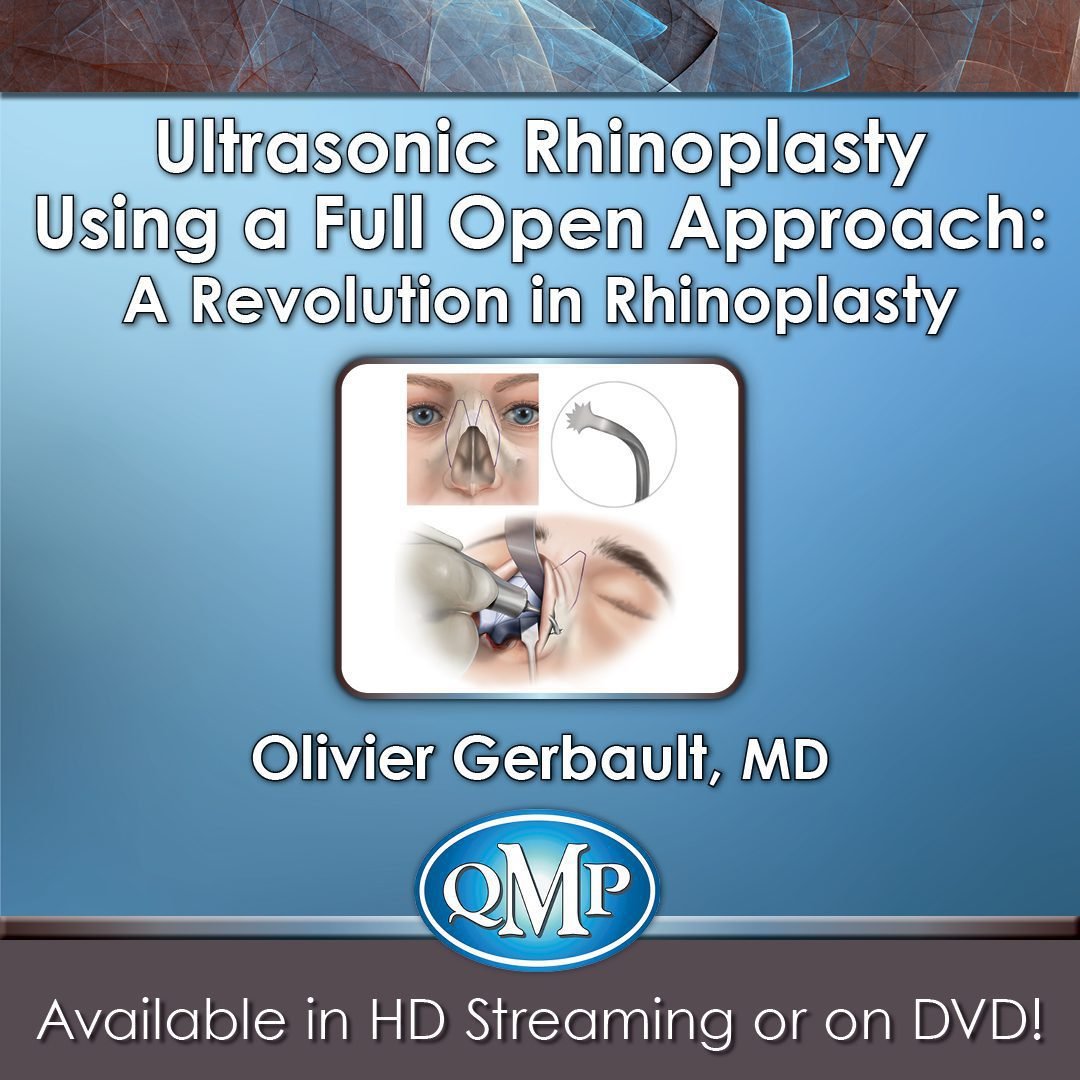
QMP Ultrasonic Rhinoplasty Using a Full Open Approach: A Revolution in Rhinoplasty
$50.00
Video Course · ENT · 2018
Dr. Olivier Gerbault presents a detailed course on ultrasonic rhinoplasty piezoelectric instruments for precise bone modification through a full open surgical approach — covering six distinct clinical scenarios across 9 hours of HD content.
-
9hours
-
6surgical cases
-
1faculty
-
2018year
- Piezoelectric instruments act on bone while preserving soft tissue
- No radiated fractures with controlled bone sculpting
- Keystone area preservation with osseocartilaginous attachments
- Six clinical scenarios from primary male to revision cases
Ultrasonic rhinoplasty with piezoelectric instruments — precise bone sculpting through a full open approach
Dr. Olivier Gerbault presents a detailed course on ultrasonic rhinoplasty piezoelectric instruments for precise bone modification through a full open surgical approach. The ultrasonic instruments interact selectively with bone and rigid cartilage, leaving all adjacent soft tissue unharmed — unlike conventional osteotomy devices, they produce no radiated fractures and permit extended subperiosteal undermining of the entire bony vault. The 9-hour program covers six distinct clinical scenarios with deliberate narration of every instrument calibration and technique decision.
-
9hours
-
6surgical cases
-
1faculty
-
2018year
Inside this resource
Piezoelectric instrument technology and calibration
The course opens with detailed explanation of piezoelectric instrument calibration, demonstrating how ultrasonic frequency modulation allows selective bone interaction while protecting adjacent soft tissue. Surgeons gain full visualization before performing controlled bone sculpting through dedicated rasps and scrapers designed for rhinosculpture. This method maintains osseocartilaginous connections at the keystone region — a vital structural junction frequently disrupted by conventional osteotomy techniques.
Six clinical scenarios across the rhinoplasty spectrum
Each of the six procedures applies ultrasonic rhinoplasty principles to a distinct clinical scenario — from primary male overprojected nose and wide vault to twisted nose correction and revision cases. Dr. Gerbault provides real-time commentary on his technique choices, describing the reasoning behind specific instrument calibrations and approach angles for each anatomical pattern. Bone osteosynthesis through suture fixation provides stable reconstruction after vault reshaping.
Incremental bone removal and aesthetic refinement
The ultrasonic approach enables incremental bone removal without soft tissue injury, maintaining nasal architecture while enabling precise aesthetic refinement. Each case demonstrates how this controlled technique produces predictable outcomes — from dorsal hump reduction to lateral osteotomy and medial vault reshaping. The full open approach provides complete exposure for complex cases where visualization is paramount.
Who this serves
- Rhinoplasty surgeons — transitioning from conventional to ultrasonic bone modification
- Facial plastic surgery fellows — understanding piezoelectric instrument applications
- Plastic surgery residents — foundational knowledge of ultrasonic rhinoplasty technology
The chart
| Format | HD Streaming / DVD |
|---|---|
| Duration | 9 hours across 6 cases |
| Publisher | Quality Medical Publishing |
| Department | ENT |
| Delivery | Instant download after checkout · lifetime re-access |
Verified original fileInstant downloadEncrypted checkout
6 reviews for QMP Ultrasonic Rhinoplasty Using a Full Open Approach: A Revolution in Rhinoplasty
Add a review
Related products





Claire D. –
The keystone area preservation concept is explained better here than in any textbook I’ve read. The visual demonstration of osseocartilaginous attachment maintenance is compelling.
Yuki M. –
Gerbault’s narration during the male twisted nose case clarified several decision points I’ve struggled with in my own practice. The DVD format feels a bit dated though.
James C. –
I transitioned from conventional osteotomes to piezo instruments last year, and this course filled gaps in my understanding of instrument selection and calibration that I didn’t know I had.
Elena V. –
Nine hours is substantial, but every minute earns its place. The six cases cover a realistic range of clinical presentations without feeling repetitive.
Stefan B. –
The explanation of piezoelectric instrument calibration before each case was something I hadn’t seen in other rhinoplasty courses. Dr. Gerbault’s narration is thorough and practical.
Ahmed S. –
Solid course for anyone moving toward ultrasonic methods. The wide vault and overprojected tip case was particularly well demonstrated with clear technique annotation.