
DentistryOnline courseGnathology
Frank Spear on equilibration and skeletal malocclusions — securing occlusal stability before you restore
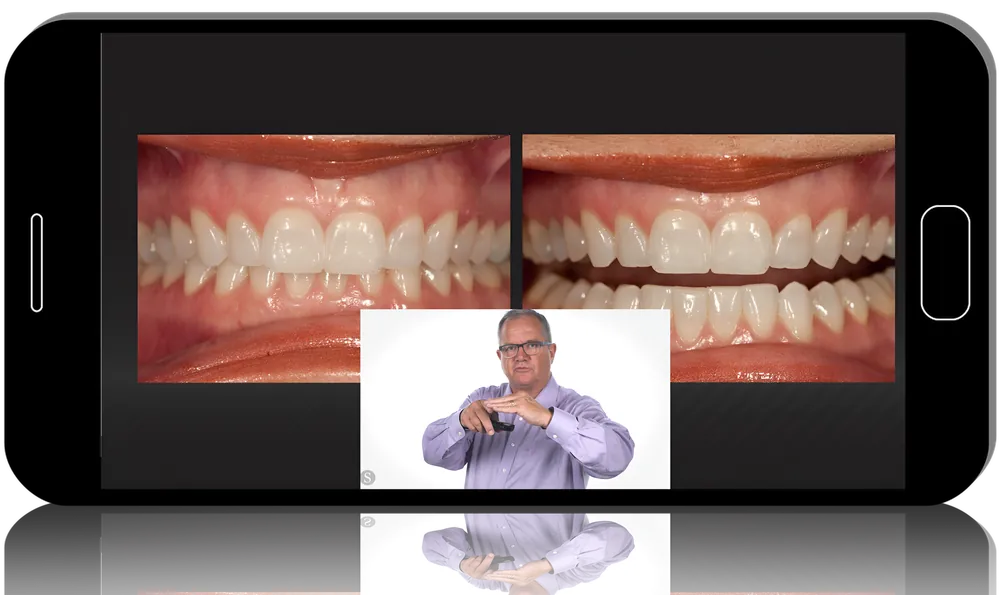
In ten short videos adding up to 2 h 20 min, Applying Occlusal Concepts in Practice has Frank Spear show how to judge whether a bite is stable and what to do when it is not. He covers equilibration in MIP and in excursions, trial adjustment on mounted casts, and restorative strategies for skeletal Class II and Class III patients.
- 10lessons
- 2 h 20 minof video
- 1979DDS, University of Washington
What you’ll be able to do
- Recognise the signs of lost stability in maximum intercuspation
- Equilibrate using the existing occlusion or to a fully seated condyle
- Remove interfering excursive contacts
- Rehearse adjustments with a trial equilibration on mounted models
- Set realistic goals for skeletal Class II and Class III restorative cases
Inside the course
Equilibration step by step
The first five videos explain how an MIP becomes unstable and compare two adjustment targets — the patient’s current bite versus a seated condylar position — before practising the sequence on articulated casts.
When the skeleton limits the ideal
The remaining clips ask what “ideal” means for compromised occlusions: managing excess overjet, building a dual bite in Class II, the risk of forcing an anterior relationship in Class III, and when an end-to-end result is the sensible compromise.
About Frank Spear
Spear co-founded a major restorative education centre, holds an MSD in periodontal prosthodontics and practises esthetics and fixed prosthodontics in Seattle with Gregg Kinzer.
Built for
- Restorative dentists before large casesConfirms the bite is stable before new crowns go in.
- Clinicians new to equilibrationShort, focused clips on each adjustment approach.
- Dentists treating skeletal discrepanciesPractical compromises when orthodontics or surgery is declined.
Curriculum
Videos (2 h 20 min) 10 lessons
- Losing Occlusal Stability in MIP (24 min)
- Equilibrating MIP Using Existing Occlusion (11 min)
- Equilibrating Excursive Contacts of the Mandible (12 min)
- Equilibrating MIP to a Fully Seated Condylar Position (19 min)
- Trial Equilibration on Mounted Models (15 min)
- What’s Ideal for Compromised Occlusions (9 min)
- Skeletal Class II Occlusion: Excess Overjet (13 min)
- Skeletal Class II Occlusion: Building a Dual Bite (12 min)
- Skeletal Class III Occlusion: The Risks of Jumping the Anterior Relationship (12 min)
- Skeletal Class III Occlusion: Building an End-To-End Relationship (7 min)
Before you buy
Is this an introduction to occlusion theory?
No; it assumes you know the basic concepts and focuses on applying them, with videos lasting between 7 and 24 minutes.
Does it overlap with Spear’s other occlusion courses?
It is a short applied module; if you own larger Spear occlusion programs, some principles will be familiar.
Do I get CME credit or a certificate?
No. Clinicapedia provides the educational content only — no CME or CE credits, MOC points or certificates of completion are included with this product.
Specifications
| Format | Online video course |
|---|---|
| Instructor | Frank Spear |
| Contents | 10 lessons |
| Duration | 2 h 20 min |
| Access | Lifetime, self-paced |
| Department | Dentistry |
| Delivery | Instant download · lifetime re-download |
Related products