

DentistryOnline courseGnathology
Barry Glassman on parafunction, EMG and the anterior midpoint stop — an evidence-first approach to TMD and facial pain
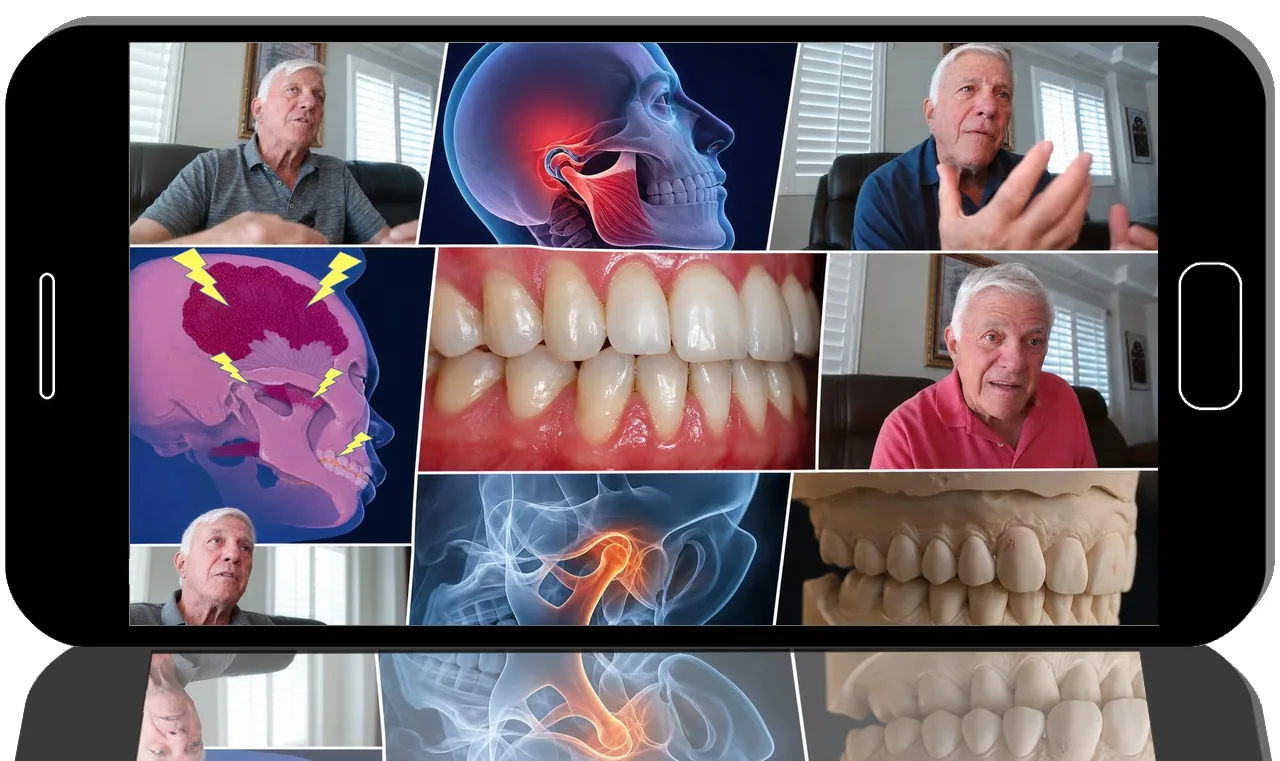
Across eight lessons and 7 h 32 min, Bite Function and Facial Pain Care: Research-Driven Strategies presents craniofacial pain specialist Barry Glassman’s way of managing TMJ disorders, orofacial pain and headache. He questions structuralist thinking about occlusion, uses EMG data to separate normal function from harmful clenching and grinding, and finishes with his protocol for anterior midpoint stop appliances and adjunctive injections.
- 8lessons
- 7 h 32 minof video
What you’ll be able to do
- Apply evidence-based dentistry principles to pain and TMD decisions
- Tell when occlusion truly matters and when parafunction is the real driver
- Interpret EMG recordings of chewing, swallowing and clenching
- Diagnose and manage occlusal dysesthesia step by step
- Use the anterior midpoint stop appliance to reduce trigeminal input
- Plan care for internal derangement and anterior open bite
Inside the course
Why the structural model falls short
The opening lesson reviews older studies used to support a mechanical view of TMD, shows how confirmation bias keeps it alive, and lays out evidence-based dentistry as the working standard for the pain specialty.
Muscles, joints and central mechanisms
Lessons on occlusion basics, the ginglymoarthrodial joint and synovial fluid, lateral pterygoid overload and the central origins of bruxism explain how trigeminal signalling changes during parafunction — and how orthodontics and TMD interact.
Measuring force instead of guessing
Glassman contrasts functional bite-force EMG with resting-muscle readings, shows muscle firing during clenching, and discusses full-arch splints with posterior contacts and a workup for migraine.
Appliances, injections and real cases
The last lessons cover stable posterior support, night-time parafunction control, the midpoint stop concept for redirecting force vectors, enthesis and ganglion injections, and a series of patient cases.
Built for
- General dentists seeing jaw painA research-based framework to replace rules of thumb about the bite.
- Orofacial pain and sleep cliniciansEMG interpretation and appliance protocols from a board diplomate.
- Restorative and orthodontic teamsHelp with patients who never adapt to a new occlusion.
Curriculum
Lessons (7 h 32 min) 8 lessons
- Foundations of Evidence-Guided Care in Orofacial Pain (1 h 29 min)
- How Teeth Meet, Move, and Misbehave (43 min)
- Overactive Muscles and Their Impact on Jaw Joint Alignment (34 min)
- Hands-On Exploration of Body Structure and Function (39 min)
- How Functional and Parafunctional Forces Shape Dental Practice (46 min)
- Managing Occlusal Dysesthesia: Evolving from Basic Bite Corrections to Care for Occlusal Neurotic Patients (1 h)
- Clinical Strategies for Maintaining a Stable Occlusion and Controlling Parafunction (54 min)
- Modern Use of Anterior Midpoint Stop Appliances and Research-Driven Strategies for Managing Orofacial Pain (1 h 23 min)
Before you buy
Does Glassman favour equilibration or bite adjustment?
No — his stance is sceptical of structural explanations and centres on controlling parafunction and trigeminal activity.
Is the “hands-on” lesson a practical workshop?
It is a recorded lecture on the anatomy and mechanics of the craniomandibular system, not a supervised hands-on session.
Are clinical cases shown?
Yes, the final lesson reviews real patient cases that illustrate the appliance and injection protocols.
Do I get CME credit or a certificate?
No. Clinicapedia provides the educational content only — no CME or CE credits, MOC points or certificates of completion are included with this product.
Specifications
| Format | Online video course |
|---|---|
| Instructor | Barry Glassman |
| Contents | 8 lessons |
| Duration | 7 h 32 min |
| Access | Lifetime, self-paced |
| Department | Dentistry |
| Delivery | Instant download · lifetime re-download |
Related products


Anesthesiology